
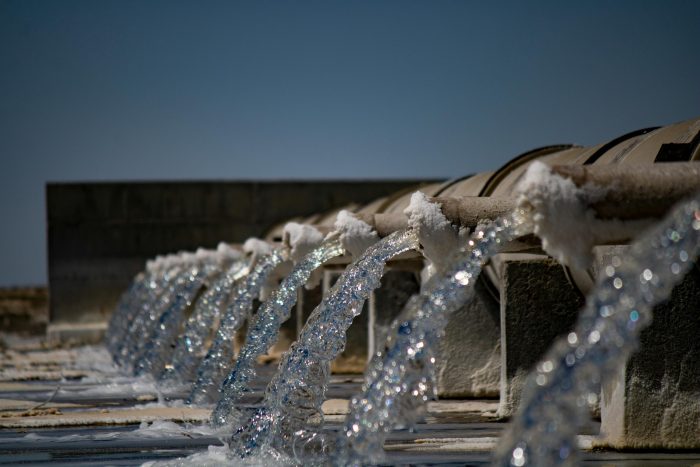
Filtration is a crucial step in water treatment that improves the water’s quality and safety by removing organic matter, microbes, suspended particles, and other contaminants. Various filtering processes are employed in accordance with the water’s source, contaminant level, and planned usage. To remove impurities from water, these filtering systems may use biological processes, activated carbon, sand, ceramic materials, or membranes. Protecting the population from waterborne diseases, enhancing the water’s smell, taste, and clarity, and making it safe to drink are all greatly aided by filtration.
Here are Types of Filtration in Water Treatment to Consider:
1. Diatomaceous Earth Filtration
Filtration using diatomaceous earth (DE), a naturally occurring porous material, is a way to purify water by removing microbes, suspended solids, and microscopic particles. The fossilized shells of tiny algae known as diatoms provide an excellent filtering medium, and this process is how diatomaceous earth is formed.
Importance:
1. Supports Other Treatment Processes
- Useful as a last filtering stage following sedimentation and coagulation
2. Improvement of Water Purity
- It makes water of excellent quality that is crystal clear
3. Efficient Removal of Microbes
- Diseases like cholera and typhoid fever can be prevented by reducing the number of bacteria that cause them
4. Ideal for Use in Fine Filtration
- Perfect for uses that call for water that has been meticulously filtered
5. Efficient Filtration
- Gets rid of microscopic particles that other filters could overlook
Limitations:
- Inadequate handling of water with extremely high turbidity
- Waste material must be disposed of in an appropriate manner
- There is a possibility that it will cost more than conventional sand filtration
- Filter media must be replaced on a regular basis
Uses:
- Water treatment for industrial processes
- Filtration systems for swimming pools
- Municipal drinking water treatment
- Industries dealing with food and beverage
2. Rapid Sand Filtration
In rapid sand filtration, water passes rapidly over a bed of sand to remove impurities, suspended particles, and even some microbes. Due to its high filtration rate and capacity to efficiently treat huge volumes of water, it finds widespread usage in large-scale water treatment plants.
Importance:
1. Supports Disinfection
- Gets rid of particles that could decrease the efficiency of disinfectants like chlorine
2. Improve Water Quality
- Water is clear and clean
3. High Filtration Rate
- Quickly treats big volumes of water
Limitations:
- Requires adequate pretreatment for optimal effectiveness
- Operating expenses are higher when compared to slow sand filtering
- Regular backwashing is necessary
- Operating and maintaining it requires expertise
Uses:
- Systems for supplying water to cities
- Systems for the treatment of water in industries
- Municipal water treatment plants
3. Ceramic Filtration
Ceramic filtration is a technique for purifying water by removing bacteria, suspended particles, and other contaminants through the use of porous ceramic materials. Ceramic filters collect pollutants in their microscopic pores and release clean water through a physical barrier.
Importance:
1. Eco-friendly
- Makes less use of chemical treatment and more use of natural materials
2. Economical Choice for Water Treatment
- An affordable option that works for people in rural areas and their homes
3. Improvement of Water Quality
- Water is safe, clear, and tastes better
4. Easy to Use
- Can be done without the need for complicated equipment or electricity
5. Effectively Remove Microbial
- Assists in the elimination of pathogenic microbes that can cause illnesses like cholera and typhoid
Limitations:
- Very delicate and easily broken
- Cleaning and maintenance are necessary on a regular basis
- Retains any salts or dissolved chemicals
- Slow rate of filtration
Uses:
- Water treatment systems for smaller communities
- In cases of crisis and natural disasters
- Systems for supplying water to rural areas
- Purification of domestic drinking water
4. Pressure Filtration
One way to purify water is by using pressure filtration, which involves pushing water through a filter medium to eliminate contaminants, suspended solids, and even certain microbes. A closed pressure vessel accelerates the filtering process relative to gravity filtration, enabling more water to pass through the filter in less time.
Importance:
1. Protect the Public’s Health
- Helps to decrease the number of microbes and pollutants that can cause diseases like cholera and typhoid
2. Constant Supply of Water
- Maintains a constant water flow and operates effectively under pressure
3. Save Space
- Due to the system’s operation in enclosed tanks, it requires less space
4. Improve Water Quality
- Makes water that is better for both industrial and household use
5. High Filtration Effectiveness
- Filters water quickly and efficiently
Limitations:
- Backwashing and routine maintenance are necessary
- Greater power needs because of pumping
- Compared to gravity systems, operational costs could be costlier
Uses:
- Boiler feed water treatment
- Small municipal water systems
- Swimming pool water treatment
- Industrial water treatment
5. Membrane Filtration
One of the most cutting-edge ways to purify water is by employing membrane filtration, which separates and removes dissolved compounds, microbes, and suspended particles using semi-permeable membranes. The membrane forces water through its microscopic pores while contaminants are kept either on the surface or within its structure.
Importance:
1. Support the Reuse of Water
- Recycles water for use in many industries and other uses after treatment
2. High Water Quality
- Makes water that is both clean and safe to drink
- Removes Pathogens Effectively
- Removing parasites, viruses, and bacteria can prevent diseases such as cholera and typhoid fever
3. Small Treatment System
- Space-saving as compared to more traditional treatment methods
4. Removes Dissolved Pollutants
- Eliminates dangerous chemicals, heavy metals, and salts
Limitations:
- The process uses a lot of energy
- Maintenance and cleaning are necessary on a regular basis
- Fouling and blockage of membranes
- High initial investment and cost of maintenance
Uses:
- The food and pharmaceutical industries
- Providing potable water
- Desalination of seawater
- Treating and reusing wastewater
- Purify industrial water
6. Activated Carbon Filtration
By employing a process known as adsorption, activated carbon filtration is able to rid water of colors, chemicals, contaminants, smells, and things that impart an undesirable taste. Activated carbon has a huge surface area and is very porous; thus, it can trap pollutants on its surface.
Importance:
1. Protect the Public’s Health
- Reduces the amount of dangerous pollutants in untreated water, which can have an impact on human health and lead to disease
2. Removal of Chlorine
- Removal of surplus chlorine utilized during disinfection
3. Remove Dangerous Chemicals
- Decreases organic contaminants, herbicides, pesticides, and industrial chemicals
4. Improve Water Quality
- Cleaner and more palatable water is produced
5. Improve Odor and Taste
- Makes water taste and smell better
Limitation:
- Clogged filters can develop over time
- Renewing or replacing activated carbon should be done on a regular basis
- Is ineffective in eliminating all dissolved salts or microbes
Uses:
- Treatment plants for treating municipal water
- Industries related to food and beverage
- Industrial water treatment
- Water filtration systems for the home
- Treatment of wastewater
7. Gravity Filtration
One way to purify water without using pumps is by using gravity filtration, which uses the force of gravity to move water through a filter medium in a natural way. Filtering water using materials like activated carbon, gravel, or sand removes contaminants, suspended particles, and even certain microbes.
Importance:
1. Ideal for Remote Locations
- Works well in areas where power and infrastructure are limited
2. Improve Water Quality
- The water is clear and clean
3. Requires Low Energy
- Reduces energy expenses by operating without pumps
4. Protect the Public’s Health
- Helps in decreasing pollutants and dangerous microbes linked to diseases like cholera and typhoid
5. Easy to Operate
- Doesn’t necessitate advanced machinery or specialized knowledge
Limitations
- Without pretreatment, it may not be as effective for extremely dirty water
- The filter medium needs to be cleaned regularly
- Compared to pressure filtration, the filtering rate is slower
Uses
- Small community filtration systems
- Domestic water filtration systems
- Systems for supplying water to rural areas
- Localized treatment networks that are small
8. Multimedia Filtration
To treat water and remove contaminants, turbidity, and suspended solids, multimedia filtration employs numerous layers of distinct filter media. In order to increase filtration efficiency and prolong filter run time, multimedia filters include materials with varying densities and sizes, as opposed to single-media filters (such as just sand).
Improve:
1. Supports Cutting-Edge Treatment Methods
- Conditions the membranes for further filtering and disinfection processes
2. Improve Water Quality
- Cleaner and clearer water is produced
3. Increased Run Time for Filters
- Operating time is extended and clogging is reduced with multiple layers
4. Efficient Filtration
- Efficiently removes particles of varying sizes
Limitations:
- Needs to be backwashed regularly
- Requires careful planning and management of operations
- More expensive than regular sand filters when first installed
Uses:
- Water cooling and process water treatment
- Reverse osmosis system pretreatment
- Systems for the treatment of water in industries
- Municipal water treatment plants
9. Biological Filtration
One method for purifying water is biological filtration, which employs microbes found in the environment to eliminate nutrients, organic matter, and other pollutants. The biological layer that forms as these microbes multiply on a filter medium breaks down contaminants as water flows through the system.
Importance:
1. Eco-friendly
- Decreases use of chemicals and contamination
2. Removes Organic Matter Effectively
- Decreases the level of pollutants in water systems
3. Protect the Public’s Health
- Kills or significantly decreases the number of infectious agents that can cause diseases like cholera and typhoid
4. Improve Water Quality
- Makes water that is safer to consume or reuse
5. Method for All-Natural Treatment
- Utilizes microbes as an alternative to chemicals
Limitations:
- Toxic chemicals have the potential to impact
- Occurs only in environments that are consistently stable
- Slow process of treatment
- The biofilm must be meticulously maintained
Uses:
- Treatment of industrial effluent
- Treatment of municipal wastewater
- System for water use in aquaculture
- Pre-treatment steps for drinking water treatment
10. Slow Sand Filtration
To eliminate harmful microbes, organic matter, and suspended particles, slow sand filtration uses a bed of fine sand as a biological water treatment medium. Particularly in more remote or smaller communities, it is one of the most time-tested and reliable ways to purify water for human use.
Importance:
1. Eco-friendly
- Uses natural biological processes with minimal use of chemicals
2. Improve Water Quality
- Produces water that is pure and safe to drink
3. Simple to Operate and Maintain
- No cutting-edge technology is required for its operation
4. Low Cost of Operation
- Needs simple equipment and minimal energy
5. Eliminating Microbes Efficiently
- Eliminates disease-causing microorganisms, including those responsible for cholera and typhoid
Limitations
- Requires pretreatment for optimal performance in extremely turbid water
- Needs a sizable plot of land
- The sand surface requires frequent cleaning
- Slow rate of filtration
Uses
- Systems for treating water in the home
- Small community water treatment plants
- Systems for supplying water to rural areas
Importance of Filtration in Water Treatment
To make water cleaner and safer for human use, filtration is a crucial step in the water treatment process. It does this by removing harmful microbes, suspended particles, and contaminants.
Protect the Environment
- Fewer contaminants end up in the world’s natural water sources
Removing Harmful Microbes
- Water is purified by eliminating parasites, bacteria, and even certain viruses
- Helps in the prevention of water-related diseases
Protects Systems for Water Distribution
- Reduces the likelihood of scaling, clogs, and pipe and treatment equipment damage
Improves Water Quality
- Improves the water’s smell, taste, and color
- Cleaner and more palatable water is produced
Safety of the General Population
- Decreases infectious and disease-causing pollutants
Decreasing Turbidity
- Reducing the amount of suspended particles in the water
Supports the Process of Disinfection
- Gets rid of particles that could impede UV or chlorination treatments
- Enhances the effectiveness of disinfection processes
Removes Organic Matter
- Improves water quality and reduces BOD by removing organic contaminants
Support the Use of Water in Industries and Homes
- Makes water safer to consume, irrigate, cook with, and use in industrial processes
Removes Suspended Solids
- Filters water of debris such as dirt, sand, and silt
- Makes water look and feel better
Conclusion
A crucial step in water treatment, filtration helps eliminate organic matter, microbes, suspended solids, and other contaminants to make the water safer to drink and use. The water is treated using a variety of filtration methods, including ceramic filtration, membrane filtration, slow sand filtration, activated carbon filtration, and rapid sand filtration, which are employed in accordance with the kind and degree of pollution. Protecting the population from waterborne diseases like cholera and typhoid fever is one of the many vital functions of these filtration systems, along with increasing the water’s smell, taste, and clarity.